Emotionally Focused Couples Therapy (EFCT)
Emotionally Focused Couples Therapy (EFCT) is a couples therapy approach that helps partners understand the emotional patterns underneath conflict and disconnection. It is commonly used for relationship issues, communication problems, trust concerns, emotional distance, and recurring conflict.
What is Emotionally Focused Couples Therapy?
Emotionally Focused Couples Therapy is based on the idea that many relationship struggles are shaped by unmet attachment needs, emotional pain, and protective reactions that happen between partners. Instead of only focusing on the content of arguments, EFCT looks at the cycle beneath them — like one partner pursuing, the other withdrawing, and both ending up feeling alone.
Its philosophy is that stronger relationships are built when both people feel safer being open, understood, and emotionally connected.
Compared with more skills-based approaches, EFCT puts more emphasis on emotional experience and bonding. It helps couples slow down painful patterns, understand what each person is feeling beneath the surface, and create new ways of reaching for each other.
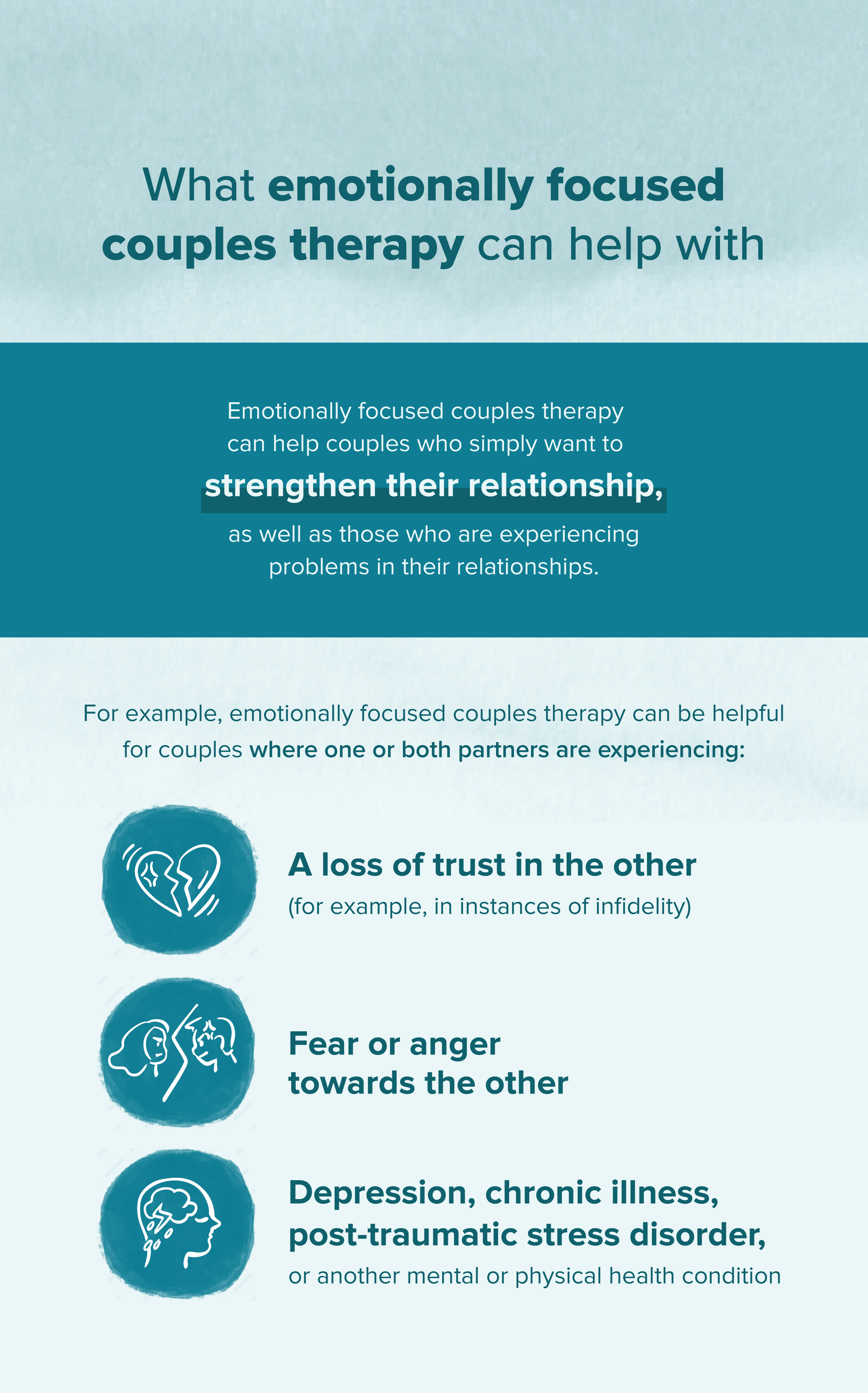
What issues emotionally focused couples therapy helps with
Emotionally Focused Couples Therapy may help with:
- Relationship Issues
- Trust and repair after hurt or betrayal
- Communication breakdowns
- Emotional distance or disconnection
- Conflict during major life transitions
Signs you might need Emotionally Focused Couples Therapy
EFCT can be a good fit when the problem is not just what you argue about, but the emotional pattern the two of you keep falling into.
Some signs include:
- You keep having the same fight in different forms
- One partner tends to shut down while the other pushes for more connection
- You feel lonely in the relationship even when you are together
- Conversations quickly turn defensive, reactive, or painful
- It feels hard to talk about hurt, fear, or vulnerability directly
- Trust feels fragile after conflict or disappointment
- You want more closeness, but attempts to reconnect often go poorly
- You feel stuck in a cycle of pursuing, withdrawing, criticizing, or shutting down
When to consider getting help
It may be time to seek support when:
- Conflict feels repetitive and emotionally charged
- You and your partner both want closeness but keep missing each other
- Communication tools alone have not changed the deeper pattern
- The relationship feels less safe, connected, or supportive than it used to
- You want help understanding what is happening beneath the arguments
What happens in a typical Emotionally Focused Couples Therapy session
A typical EFCT session often follows this kind of flow:
- Check-in: The therapist starts by asking what has happened since the last session and where the relationship feels most strained right now.
- Identify patterns and goals: You and your partner look at the cycle that happens between you, for example, criticism and withdrawal, or protest and shutdown, and clarify what you want to change.
- Practice a method or exercise: The therapist helps slow the conversation down so each partner can notice and express the feelings underneath their reactions, such as fear, hurt, sadness, or longing for connection.
- Reflect: Together, you look at how each person experiences the pattern and what happens when vulnerability is expressed more clearly and received more openly.
- Plan next steps: The session usually ends with one or two takeaways about how to recognize the cycle, respond differently, and create more emotional safety between sessions.
How long emotionally focused couples therapy usually takes
Emotionally Focused Couples Therapy is often weekly, especially at the beginning when the relationship feels tender or conflict is frequent. It can be short-term or longer-term depending on your goals, the level of distress, and how established the relationship pattern is.
Some couples use EFCT for a focused period to improve connection and communication. Others continue longer when they are rebuilding trust, working through longstanding pain, or trying to change deeper emotional patterns.
Related blog articles
Is EFT right for you in couples therapy?
What to look for in a therapist for EFCT (Emotionally Focused Couples Therapy)
- Specialized training in EFCT. EFCT is a structured, evidence-based approach specifically for couples
- Focus on emotional patterns. The therapist should help you understand underlying emotions, not just surface-level conflict
- Ability to create emotional safety. Sessions should feel supportive enough for both partners to be open and vulnerable
- Skill in slowing down conversations. EFCT often involves carefully unpacking interactions moment by moment
- Guidance toward connection and repair. The therapist helps partners move from reactive cycles to more secure, supportive interactions
EFCT insights
Studies show that 90% of couples who participate in EFT significantly improved their relationship, and 70-73% of couples who complete EFT successfully recover from relationship distress.
Related therapies
Comparable or contrasted approaches may include:
FAQ about Emotionally Focused Couples Therapy
What is Emotionally Focused Couples Therapy used for?
EFCT is often used to help couples with conflict, disconnection, trust issues, and communication problems. It is especially helpful when partners feel stuck in painful emotional patterns.
How is EFCT different from other couples therapy types?
EFCT focuses more directly on emotions, attachment, and the bond between partners. Rather than only teaching communication skills, it helps couples understand and change the emotional cycle underneath conflict.
Does Emotionally Focused Couples Therapy help with communication?
Yes. It can improve communication by helping partners slow down, express deeper feelings more clearly, and respond with more understanding instead of reacting from hurt or defensiveness.
How long does EFCT usually take?
It varies. Some couples attend for a few months, while others stay longer depending on their goals, the intensity of the issues, and how much trust or reconnection needs to be rebuilt.
Can Emotionally Focused Couples Therapy be done online?
Yes. Many therapists offer EFCT online, and it can work well for couples who want more flexibility or are meeting from different locations.
Do both partners have to attend?
Usually, yes. EFCT is designed to work with the relationship dynamic between both partners, so both people typically participate in sessions.
What happens if we get emotional in session?
That is often part of the work. EFCT creates space to explore emotions in a guided, supportive way so they can become easier to understand and share rather than something that only comes out during conflict.
Find vetted therapists who practice Emotionally Focused Couples Therapy
- Alabama
- Alaska
- Arizona
- Arkansas
- California
- Colorado
- Connecticut
- Delaware
- Florida
- Georgia
- Hawaii
- Idaho
- Illinois
- Indiana
- Iowa
- Kansas
- Kentucky
- Louisiana
- Maine
- Maryland
- Massachusetts
- Michigan
- Minnesota
- Mississippi
- Missouri
- Montana
- Nebraska
- Nevada
- New Hampshire
- New Jersey
- New Mexico
- New York
- North Carolina
- North Dakota
- Northern Mariana Islands
- Ohio
- Oklahoma
- Oregon
- Pennsylvania
- Puerto Rico
- Rhode Island
- South Carolina
- South Dakota
- Tennessee
- Texas
- Utah
- Vermont
- Virginia
- Washington
- Washington DC
- West Virginia
- Wisconsin
- Wyoming